Friday, November 6, 2009

I just got off work, and I'm totally exhausted.

BUT! Listen up: I'll be DJing alongside MARTIN FUCKING ADKINS. Yes, you heard me. Martin Adkins, of Ministry and Pigface fame, will be occupying the same dj both as yours truly. We will be leading dance floors into gritty, dirty, raunchy boot pounding bliss. It will be absolutely glorious.

In other news!

I'm randomly trolling through my photobucket, and I found this photograph of myself:
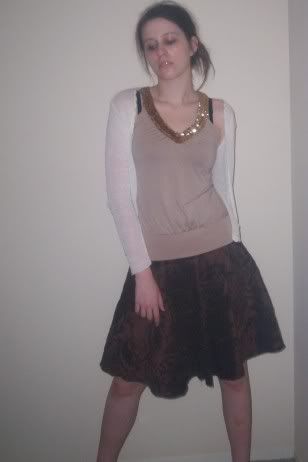
I was trying to sell this stuff to fund my I REALLY DON'T WANNA GO TO JAIL fund, but holyshit I look weird. As in, emaciated high-dollar socialite weird. As in, my bitch ass can sneak in to any red carpet party and cause a fucking ruckus weird. As in, who the fuck is that person?! weird.

Considering the fact that my brain is far too fried to post anything in this blog of actual worth, I'm going to give you a rambling tour of my photobucket. Like all great (i.e. ridiculous) chronologies, we're going to start from the last page onward. Because that's just how I roll.
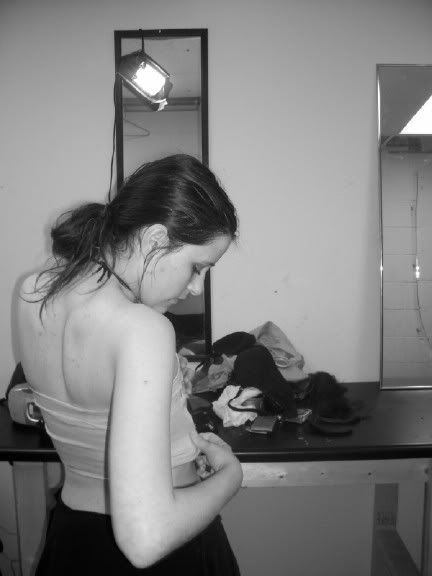


Year one of drag. This is the first time I ever strapped my tits down on camera. It was a photo project a friend and I were working on, showing the transition between girl and boy. There are more photos, but this one is the gem.
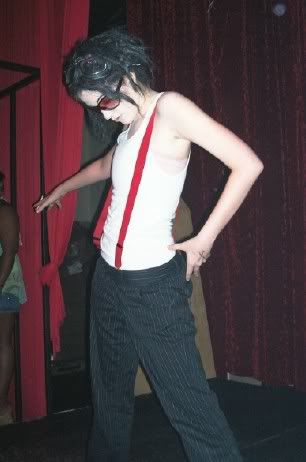
Again, year one. This is a rather iconic photo of Aleksandr. It's low quality, and not a great shot, but even at that point in my performance evolution, I think it shows a fair amount of bravado and hypertheatrics.
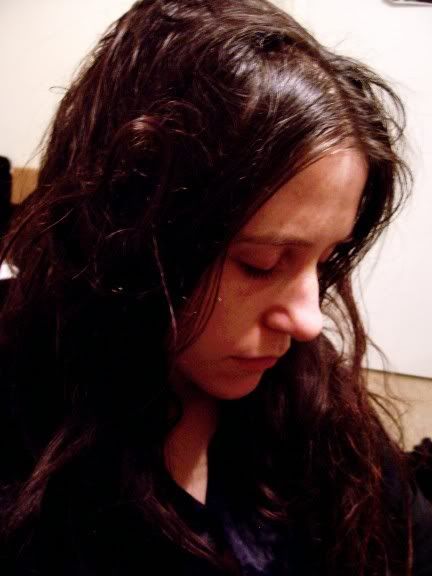
Everyone's got one. Don't lie.

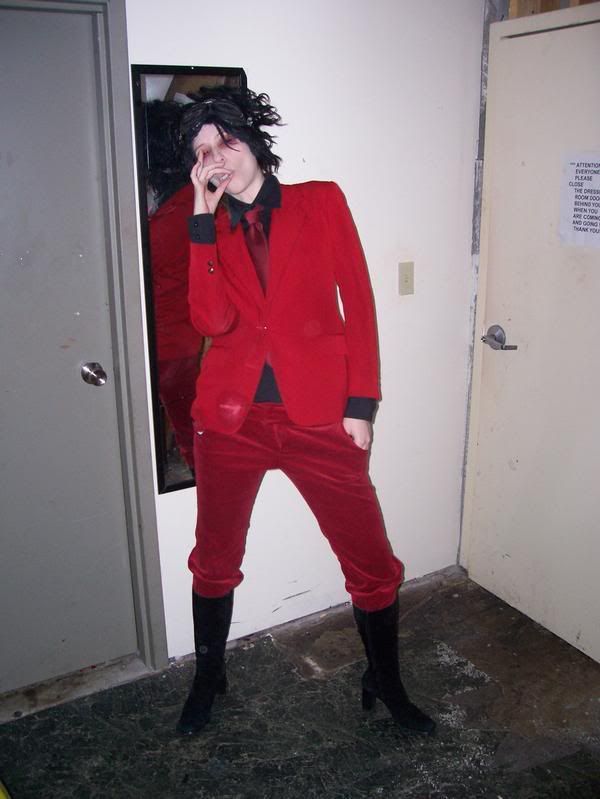
The second evolution of Aleksandr. More balls, more bravado, more makeup, more androgyny. I've been told that, in this suit, I am "the devil's lawyer." It was Valentine's day. I prowled the campus causing havoc. I figure, if anything, I wouldn't be the devil's lawyer, I'd be the devil's fire-under-the-ass.

Cocaine shoot. My friend wants to be a photographer. She wanted to do a shoot. I was all about it. The blood on my face is actually tattoo ink. Totally doesn't look like me, but whatever.
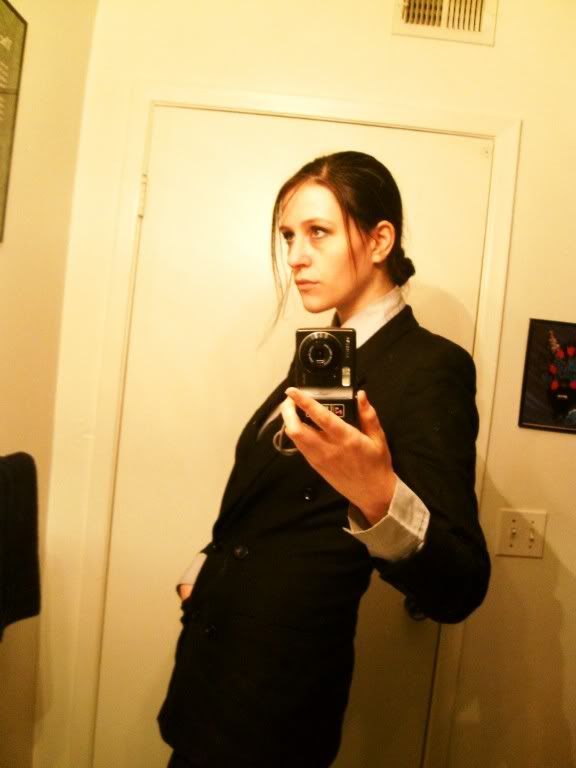
Oh hai, I'm a strange looking high-fashion model. OH WAIT. I'm Oscar Wilde. OH WAIT!! Identity crisis OH NOES. In this photo, I was on my way to a shoot, and asking a friend for advice. This photo also got me in a lot of trouble later on, but that's a story for another day.

Right.


So, there's my photobucket. I skipped over the random images of bright glaring things, grafitti, street signs, comics, and vhs cover jackets of nunsploitation films (if you haven't taken an internet look at the, YOU SHOULD). But there you go. A history of me in film.

There are more recent photos of me (that last photograph is about, eh, two years old), but they're already on here. SALUTE.


To quote the man beside me, "would you like to be in a cubicle somewhere, just typing away..?"

Because apparently, being on a machine means being in a cubicle.

Tuesday, November 3, 2009

I just got out of an employee meeting (I know, ugh: but really, it wasn't so bad. Kajun's doesn't work like other places), and opened up an essay I've been trying to read while on my shifts (I get all of my internet time whilst working).

Anarchism and the Politics of Technology


It's a bit lingo-dense, and the academic language is a bit heavy, but I've never been turned away from that kind of thing. I've only read up to the end of the articulation of Promethean and Primitavist arguments for technology, and thus far, I think this essay has a lot of illuminating points. I'm just now getting to the build up for the meat of the essay, which is a theory of anarchism and technology that goes beyond these two modes of thinking.

I've got some more reading and thinking to do, but I'm pretty interested in this essay thus far, and would like to analyze it further (you know, when I actually *finish* the essay, perhaps? I've got a problem with getting really excited about things and wanting to gear up for discussion prematurely -- but hey, at least you have all been forewarned about it now, so you can be prepared to discuss with me!)

This piqued my interest:

As technologies are being built and put into use, significant alterations in patterns of human activity and human institutions are already taking place . . . the construction of a technical system that involves human beings as operating parts brings a reconstruction of social roles and relationships. Often this is a result of the new system’s own operating requirements: it simply will not work unless human behavior changes to suit its form and process. Hence, the very act of using the kinds of machines, techniques and systems available to us generates patterns of activities and expectations that soon become “second nature.” (11–12)


I also get the feeling that there's going to be some Cyborg Manifesto re-reading very soon.

I am deeply invested in ideas of technology and the evolution of the human in general. Figuring out how to apply that to class relations and social structures as a whole is something I'd like to think about and work out more. The idea of 'posthumanism', an evolution of the human being from what it once was, integrating ideas of modification, technology, tearing apart and refiguring the structures of what we are and what we could be has been on my mind a lot lately. Watch closely. We're going to blow this shit apart.

Monday, November 2, 2009

MICHAEL IS MY HERO KTHNXBAI.

you may now return to your regularly scheduled programming.
I'm at work, and incredibly zonked from Halloween and all of the festivities (I'll try to find photographs from someone, but let's just say I worked a shift and sauntered around the French Quarter dressed as a back-alley-abortion-nun, blood covered rubber fetus on a coathanger and all).

I'm doing what I do best when the bar is dead: prowling the internet. And I found this great little site for a collective in New Zealand. They've got a lot of great things to say, but I was particularly moved by this part:

Yanked from Beyond Resistance:

We reject patriarchy and fight for the empowerment and liberation of women. We stand in solidarity with feminist struggles, and believe that actively challenging the personal and interpersonal manifestations of patriarchy is equally as important as working towards structural changes. Both need to happen together to create a new society free of male domination.

With this in mind, Beyond Resistance aims to have a radical feminist perspective, in several ways. Firstly, we need a radical feminist analysis of our society that challenges male dominance, compulsory heterosexuality, and the bipolar gender system. Secondly, our internal operations (organizing structure, roles and responsibilities, meeting procedures, decision making, etc.) must ensure women’s participation and be strongly aware of practices that tend to favor men’s voices over women’s, and we must work to overcome them. Thirdly, we must not neglect radical feminist political struggle, particularly those kinds which connect struggles against sexism with the class struggle and building dual power. Finally, our future vision must be feminist. It should imagine a world not only without sexism or homophobia but one in which gender relations are completely transformed and liberated. Toward this end, we recognise resistance to masculine/feminine gender borders and encourage people to critique and explore their desires rather than repress them.


Word, word, and AMEN.

A world in qhich gender relations are transformed? Where gender borders are smashed just as sure as nationalist ones? Where we are free to explore our desires instead of beat them into silence?

My kind of world.

Wednesday, October 21, 2009

Sexism, Anachism, and Men.

Man, I really need a computer.

So, I think I'm going to start reading this eBook: From the Kitchen: Sexism, Anarchism, and Men

Unfortunately, right now I am keeping my computer at work, and don't have a printer to get a copy of this to read on my own. And most of the time I really have to read is after I get off work (or in bits and pieces during my shift when it's slow -- good for reading smaller essays, harder to really analyze a longer work). But I really, really want to read this. Just take this quote from the introduction:

This zine has been produced by a group of anarchist men in Otautahi as part of an on-going process of working on our own sexist behaviour in our everyday lives. It is not just for men to read but the primary function is we hope, to encourage more debate and more discussion about issues of sexism amongst ourselves.


Now, that's something I can get down with. As a androgyne culturally raised as female (with a penchant for drag and a sometimes-boyishness, or Aleksandr), "male-ness" is a frontier I'd like to know more about. Men in feminism is rather dicey territory: there is, of course, the male privelege issue, as well as the cadre of feminists who believe that a men can never be feminists: at best, they can be 'male dissidents.'

What would make me, an androgyne who feels no real affinity toward either gender as a whole? Who feels more neither than either, who feels like both a dress and a three-piece suit is equal drag? Who has a more fully carved out 'male' persona than 'female'? Aleksandr has a bit more of a defined gender role than 'Sasha,' -- I feel more 'male' as Aleksandr than I do 'female' as Sasha, and I was born a female.

I'd say, of course, that I am a 'gender dissident', but not just against patriarchy. Though, in a way, I guess it is. Patriarchal systems have certainly lent us an oppressive binary, though who is to say that might not've happened in a matriarchal power structure?

No gender -- trans, non, girl, boy, androgyne -- should have any more power than the other. We, at our best, should all be fucking dissidents. I might not be a 'girl,' but god damnit, I'll call myself a feminist if I want.

You want to try to stop me? You'll have a pair of ass kicking combat boots aimed straight to your face. And when it all topples, I'll be here on the other side with you. And I'll offer you a hug, a shot of whiskey, and pie.

Tuesday, October 20, 2009

Binary Systems: or, ASSIMILATE OR DIE.

So, I was reading over Mike's blog (Hi, Mike!), and laughed out loud when I read this:


Of course no one thinks of the poor as more than one thing. Nope the poor is unified, we are the poor, we will assimilate. Poooooor.


It is an incredibly valid point, but I emphasized this because I admire the way Mike can talk about really serious things while keeping his sense of humor. It's a trait I think most of us should cultivate.

Annyway, to continue on his point:


It is a bunch of crap and I really hate it when people talk about the poor as singular and solvable. They are people and their various situations are as varied as they are.


Amen, anyone?

The ideas of class and privelege aren't something we can lump together in one great big fucking box of 'disenfranchised' and 'evil as fuck'. There's more subtlety to it, more nuance, and it'll do us a lot of good to think of things as more of a spectrum of experience than a binary system set in metaphysical stone.

Binary systems, as an enterprise, are flawed from the get go. The roster list of facisms we inflict on one another due to binary systems is staggering: gender, sexuality, morality, and the more amorphous bunches like truth-claims (things are "true" or "untrue", without the possibility of multiple truths and fictions or evolutions of truth-forms) and memory (something "happened" or it "didn't", and memory is always "concrete", a "static" thing, or it is not memory: when really, memory is something that is constantly refigured in our own minds). Binary systems, as a rule, I find to be limiting: the very act of definition is, in a way, a microfacism (though one that is often necessary), and to define something with only two variables seems, to be frank, ridiculous.

On fictions

I'm at work, yet again, with a mostly-quiet bar, which of course means I'm piddling around on the internet. While prowling through various message groups, I found a book review about this:


Mythmakers & Lawbreakers looks like a book I really want to read. As someone very invested in the power of fiction and the study of literature, it seems only natural that I'd be ridiculously excited about this.

I haven't read the book yet, so I've got no commentary of my own, but the review of the work got me thinking about some things. Let me give you a snippet of the review:

A third theme to come out of these interviews wasn't so surprising: politics. Anarchist fiction writers grapple with politics all the time. The politics of writing fiction when the world is dying (see the Derrick Jensen quote, above). Creating an anarchist utopia that is more reality and less utopia. Accurately reflecting the political struggles of everyday life-- including the lives of punks, traveler kids, hackers, pagans, earth first! eco-warriors, and direct action activists. In every interview, Killjoy asks what it means to be an anarchist and a fiction writer. The responses he gets demonstrate how fiction is a political act. While most anarchist writing of our day is limited to real-life ("boring as fuck" -crimethinc.) theory and analysis, anarchist fiction writers play the important role of dreaming what could be and distilling useful stories from what is.
What does it mean to be an anarchist fiction writer? Do we have responsibilities, and if so, what are they? What of 'art for art's sake'? Could it not be said that any true, honest articulation (that particular breed of honesty that is only possible in fiction) of the human experience can, in some way, be an anarchist act? That to look at the world, to relay experience with an unflinching eye toward the real core of truth, is itself a pure distillation of anarchy in action?

In some ways, I believe that fiction can do just as much towards the illumination of truth(s) as "real life.. theory and analysis." I would agree that fiction does indeed play a pivotal role in the oh-so-vital part of our literatures that, I have previously said, we seem to be lacking -- hope. Possibility. Lights in what sometimes feels like an endless void of set-backs, betrayals, fascisms, and heartbreaks. Being able to connect with one honest experience, even if it is seeded with vice, let downs, and unrealized potential (hell, perhaps it is even more valuable if it is), is immesurably important toward creating a new world, even if that experience is one learned through the pages of a novel.

The role of story tellers and fiction weavers is one that I feel we, in our propaganda-saturated, lie filled world, have delegated to the sidelines. In many ways, I feel we don't trust fiction, because we are force-fed it by the media, by those in power, by the very people who claim they are here to "protect" us. But in fiction's defense, I don't believe that every fiction is a lie. Just because we haven't reached that horizon yet doesn't mean that dreaming of it is an act of deception.

How can we create a world if we cannot dream?